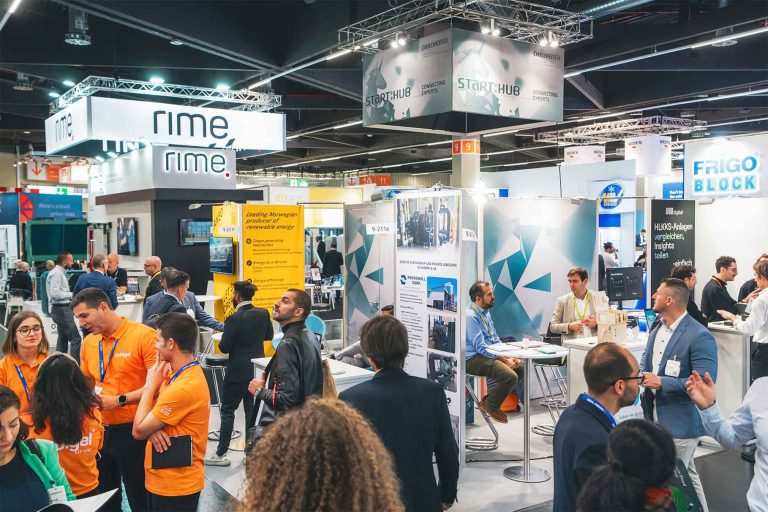


Whether it is detecting microplastics in real time, identifying lithium batteries in waste streams, or converting organic residues into high-value chemicals, startups are increasingly driving the innovation dynamics of the environmental technology sector. In the Startup Area in Hall C4 at IFAT Munich, 50 international emerging companies will present their solutions to the key challenges facing the water, recycling, and circular economy sectors. It is becoming clear that artificial intelligence, advanced sensor technologies, and bio-based processes are rapidly evolving into the core technologies of a functioning circular economy.
Visualizing Microplastics in Real Time
Stricter regulatory requirements—such as those under the EU’s REACH chemicals regulation or the Urban Wastewater Treatment Directive (UWWTD)—are increasing the pressure to reliably track and prevent microplastics. This is exactly where ZAITRUS, a startup founded in 2024 in Bayreuth, Germany, comes in. Their sensor-based flow system detects plastic particles in liquids in real time, ranging from wastewater to beverages. The solution identifies, categorizes, characterizes, and quantifies the materials at an early stage—directly at the source.
“For municipal wastewater treatment plants and food manufacturers, this offers an effective prevention and quality assurance mechanism that can protect against damages,” says Till Zwede, Managing Director of ZAITRUS.
The technology is currently in its pilot phase. At IFAT Munich, the company aims to secure new partners for further pilot projects. From the turn of the year 2026/27, ZAITRUS plans to offer a fully-fledged ‘Monitoring-as-a-Service’ model.
Using Bacteria Against Chemical Pollutants
To degrade microplastics and other contaminants such as PFAS, pesticides, and pharmaceuticals, the startup CellX Biosolutions utilizes high-performance, bacterial products. To do this, it has developed a technology that captures rare bacteria from contaminated sites—such as wastewater treatment plants, rivers, lakes, soil, or groundwater at industrial locations—that are specifically attracted to certain chemical pollutants.
“When isolated and cultured in the laboratory, these can be used to create unique bacterial consortia that degrade chemical contaminants directly within industrial processes, such as in wastewater treatment plants,” explains Estelle Clerc.
According to the Managing Director of the startup, which was founded in 2024 at the ETH Zurich in Switzerland, the company is currently seeking partners for laboratory and industrial pilot projects. Ideal partners include chemical companies, PFAS users, or owners of contaminated sites. The goal is to test and scale the technology using real contaminated water and soil.
“Our long-term goal is for wastewater and soil remediation technology providers to purchase our bacterial products and deploy them at end-user sites. Full commercialization is slated to begin in 2028,” says the biotech company’s co-founder.
AI-Powered Sensor Technology Detects Batteries and Gas Cartridges
Hidden lithium batteries are causing an increasing number of fires in waste sorting and recycling facilities worldwide. To safely detect and extract these and other dangerous objects, such as nitrous oxide cartridges, Norwegian startup Litech AS has developed an AI-driven sensor technology.
The compact, retrofittable system is based on Magnetic Induction Spectroscopy (MIS). It uses multi-frequency electromagnetic fields to identify metallic objects by their unique signal signatures. Combined with artificial intelligence (AI), the process can differentiate lithium batteries and pressurized gas containers from harmless metal objects on a moving conveyor belt—even if the contaminants are trapped in plastic bags or obscured by other waste.
“We have already moved beyond the pure pilot phase,” reports Synne Sauar, CEO of the company, which was founded in Oslo in 2021. According to Sauar, a first-generation sensor has been successfully operating in a municipal waste facility in the Norwegian capital since 2024.
“At IFAT Munich, we are open to both new pilot partnerships and commercial discussions,” she explains. The primary target groups are operators of sorting and recycling plants, municipal waste management companies, as well as OEMs and system integrators in sorting and recycling technology. Current focus markets include the Nordic countries, the DACH region (Germany, Austria, Switzerland), and France.
Intelligent Grippers Optimize E-Waste Recycling
AI is also one of the two core technologies utilized by Swedish startup Enodo Robotics. The other is a patent-pending robotic gripping system capable of grasping objects of various shapes and textures with high flexibility. Together, they form a system designed to replace the mostly manual sorting of electronic waste (e-waste) and non-ferrous metals.
“This waste stream is a valuable source of critical raw materials. Our AI and robotics solutions help maximize the value extracted from these materials while eliminating the need for manual labor in often hazardous environments,” says Klas Kronander, co-founder of Enodo Robotics.
Beyond sorting, the AI vision platform—trained on millions of images from real recycling processes—enables material flow analysis, giving recycling companies real-time insights into the composition and quality of their material streams. The system is commercially available as a retrofit solution for existing recycling lines and is already in use by customers under production conditions.
Converting Bio-Waste into Platform Chemicals
EveryCarbon, a biotech startup based in Tübingen, Germany, uses organic waste—such as from households, agriculture, and the food industry—combined with wastewater and genetically modified bacteria to produce 2,3-butanediol, a raw material for high-performance polymers.
“Our vision is zero-waste production where waste materials become the starting point for new products,” explains Dr. Sebastian Beblawy, Managing Director of the company, which was spun out of the Hamburg University of Technology in 2024.
EveryCarbon currently operates a small pilot plant at a wastewater treatment facility near Stuttgart. There, the founding team is ramping up its continuous fermentation process under real-world conditions and validating its first product: a rigid foam for structurally and thermally demanding construction applications.
“IFAT Munich is a strategically critical platform for us because it maps exactly the intersection we operate in: where organic waste carbon from households, industry, and wastewater meets industrial materials management,” Beblawy emphasizes.
“On one hand, our target groups are bioenergy plants, municipal utilities, and wastewater treatment plants that currently underutilize organic carbon and are seeking new value-creation pathways. On the other hand, we want to connect with materials manufacturers looking for high-performance alternatives to petrochemical material systems. Finally, we look forward to exchanging ideas with technology companies that offer solutions in materials and process engineering.”
The Startup Area: An Innovation Engine for the Sector
These examples demonstrate that innovation in environmental technology is increasingly occurring at the intersection of digitalization, biotechnology, and the circular economy. IFAT Munich brings these developments together, strategically connecting startups with municipal operations, industry leaders, and technology providers.
Further details on the Startup Area, other special exhibition zones, and the thematic stages at IFAT Munich can be found at www.ifat.de.
< Back to Ecological Preservation
< Back to Automation, AI, Robotics

> Here is one of the places where the issuer of a news item is branded.
> Tap buttons or logos to be redirected to the issuers profiles or pages.