

“PAnDA” relies on digital product passports and artificial intelligence (AI) to make the recycling and disassembly of products more efficient. To this end, new solutions for sustainable product development and resource conservation are being created at several locations in Germany. Fraunhofer IPA is leading the project and contributing extensive expertise in robot-based and AI-supported disassembly.
The electrification of the mobility sector, the rise in battery-powered devices, and the energy transition are leading to a growing demand for (rare) raw materials. Since natural resources are limited, the circular economy is becoming a central strategy—particularly in resource-scarce countries—to meet these demands. The PAnDA project (Digital Product Passport for sustainable circular-focused product development, disassembly, and sorting through automation) addresses this exact challenge and develops solutions with the goal of closing material loops. The Federal Ministry for Economic Affairs and Energy is funding seven project partners for this over a three-year period.
Reusing raw materials and components more easily
A major obstacle to the circular economy is currently linear product designs, which are not geared toward circularity, as well as a lack of technological processes for sorting and disassembly. PAnDA addresses this challenge on several levels: product analyses are being carried out in the automotive, consumer products, and electrical appliances sectors to develop a cross-manufacturer and cross-industry methodology for sustainable product development and automation solutions.
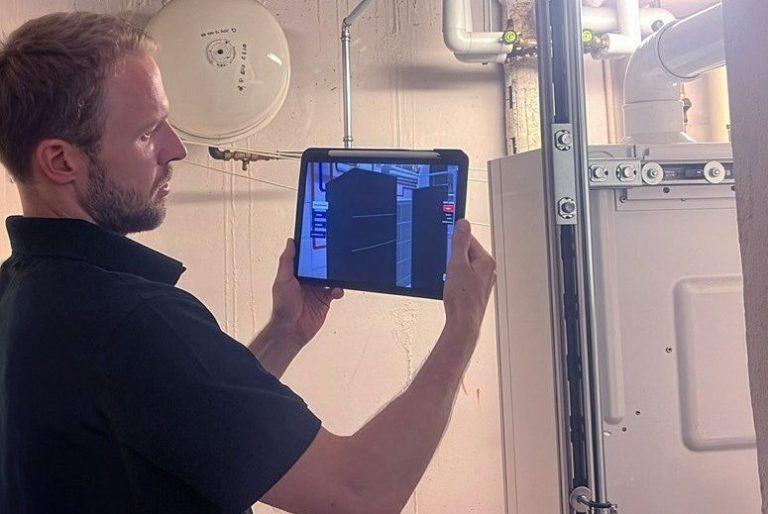
The core of the project will be a new Digital Product Passport (DPP) based on established EU-wide standards. This passport provides relevant information, for example via QR code or RFID chip, such as: In what sequence must a product be disassembled? How suitable is it for disassembly in the first place, based on its material or connection elements (disassembly score)? In addition, machine learning methods are used to supplement missing information and enable automated sorting and disassembly. Another development goal is the early assessment of the disassembly capability of new products using a software toolkit for design engineers.
Multiple demonstrators for an automated circular value chain
In order to develop and practically test these technologies, decentralized demonstrators are being built and networked across Germany. This creates a virtual and digitalized circular factory in which real and software-based demonstrators interact.
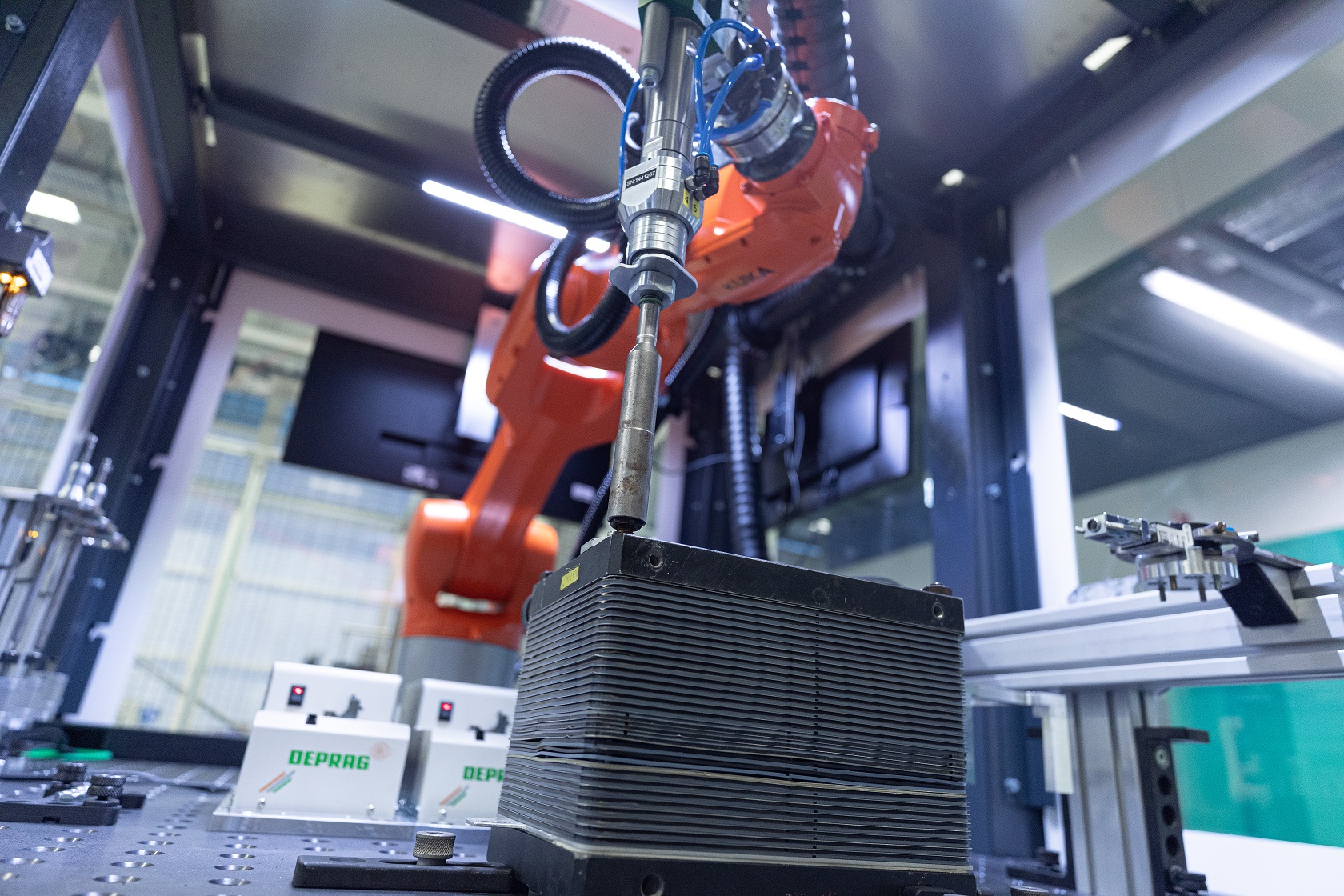
In Augsburg, project partner Kuka is developing a demonstrator for AI-supported sorting, which includes object recognition, pose estimation, and intelligent robotic skills. In Stuttgart, two demonstrators address disassembly: The demonstrator at the Fraunhofer Institute for Manufacturing Engineering and Automation IPA focuses on the AI-supported derivation of the disassembly sequence from technical drawings. Another one at Robert Bosch GmbH at ARENA2036 will showcase a flexible (dis)assembly system for the circular production of the future. In Aachen, at the Institute of Mechanism Theory, Machine Dynamics and Robotics at RWTH Aachen University, a demonstrator is being set up to integrate the developed skills and test a new end effector. The results of the project are to be transferred into industrial practice in the form of products and components, thereby accelerating the market transfer of research results.
Fraunhofer IPA contributes robotics expertise
In addition to project management and the aforementioned demonstrator, the research team from Fraunhofer IPA is participating in PAnDA primarily with hardware and software modules from predecessor projects. This includes solutions from previous projects such as DeMoBat, ReNaRe, and Desire4Electronics in the form of disassembly tools, detection methods using machine learning, and process parameter sets that will be used and further developed. Insights into design for disassembly from previous work are also being incorporated. Furthermore, the team is developing the information for the digital product passport related to robot-assisted disassembly.
Focus on National Circular Economy Strategy and UN goals
The project contributes significantly to the National Circular Economy Strategy and addresses measures such as improved product design, digitalization, and the closing of material loops. It also supports six of the 17 UN Sustainable Development Goals and promotes the competitiveness and innovative strength of Germany as a business location. With PAnDA, an important step is also being taken toward a digitalized and automated circular economy—for a sustainable future and the securing of raw materials in Germany and Europe.
< Back to Ecological Preservation
< Back to Automation, AI, Robotics
< Back to Engineering, Industrial…

> Here is one of the places where the issuer of a news item is branded.
> Tap buttons or logos to be redirected to the issuers profiles or pages.